How do you train a new hire to run tire storage intake during the busiest week?
Storage intake mistakes stay hidden until changeover season, when they turn into lost sets and awkward phone calls. Here is the sequence we would teach a new hire, and how we would check their work.
Why intake is the worst job to hand over cold
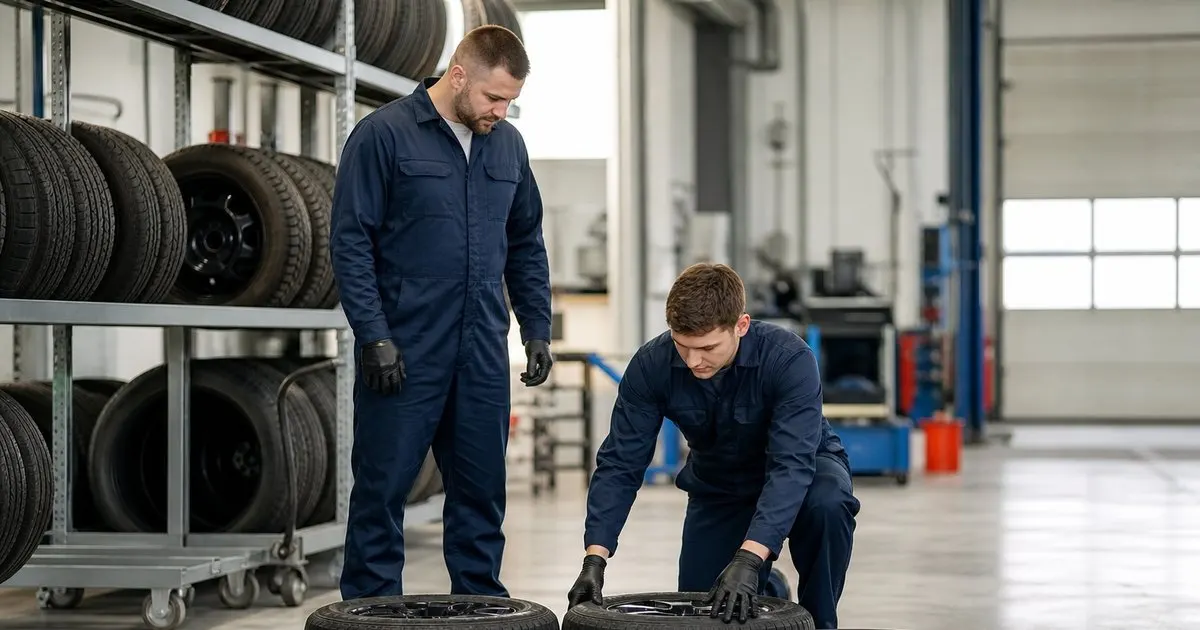
Intake is where a storage program either works or quietly breaks. Everything downstream depends on it: the rack location, the changeover reminder, the invoice, the condition history. All of it comes from what one person recorded in the four or five minutes the customer stood at the counter. A tech who mounts a tire wrong creates an obvious problem you fix that afternoon. A new hire who leaves the rack slot blank or attaches the set to the wrong vehicle creates a problem nobody sees until October, when four tires are somewhere on the rack and no one can say which shelf. Related: How do you track where every customer's stored tires sit on the rack?
The second reason intake is risky in untrained hands is that the customer is watching. For most storage customers, intake is the only part of the program they ever experience directly. If the new hire fumbles the condition walkaround, forgets to explain what happens at changeover, or never says the storage fee out loud, you inherit that confusion months later as a dispute at the counter. Treat intake as a customer-facing role with a data entry job attached, and train both halves of it deliberately. Related: What is the best way to remind customers about a seasonal tire changeover?
Keep reading: How do you track where every customer's stored tires sit on the rack?, What is the best way to remind customers about a seasonal tire changeover?, Why should a shop record tread depth history for every stored tire set?. See how TireKeepr helps you tire storage and seasonal changeover tracking.
Write the intake sequence as a script, not a screen full of fields
Most shops train intake by pointing at the software and saying fill this in. That teaches the fields but never the order, and order is what holds up under pressure. Write the sequence the way it actually happens, at the counter and at the car: confirm the customer and the vehicle, confirm which set is going into storage and which is going on the car, walk all four tires and record tread depth plus any damage, photograph anything unusual, settle whether the TPMS sensors stay with the stored wheels, state the storage term and fee out loud, then assign the rack slot and tag the set before it leaves your hands. Related: Why should a shop record tread depth history for every stored tire set?
The two steps new people skip most are the spoken ones and the tag. Saying the fee and the pickup window aloud takes roughly ten seconds and prevents the two most common storage arguments a shop ever has. Tagging the set at the moment it is recorded, instead of at the end of the day when four unlabeled sets are staged by the door, prevents the mixups that turn into lost sets. Put both in the script where they cannot be missed, and audit those two specifically during the first week.
Train on real sets in the slow weeks, not on customers in October
The changeover rush is a terrible classroom. Plan backwards from it. Someone hired in August should be doing supervised intake in September on ordinary walk-in sets, not running their first live intake on a Saturday with eight cars waiting in the lot. If the slow season does not give you enough real volume, manufacture it. Have the new hire re-intake sets already sitting on your rack as a drill, then compare their record against the original. Every mismatch is a free training conversation that costs you nothing but ten minutes.
Shadowing usually works better in the opposite direction from how shops run it. Rather than parking the new hire behind an experienced advisor for a week, have the experienced advisor watch the new hire from day two and correct in the moment. People retain the correction of their own mistake far better than a demonstration of someone else doing it right. Two or three supervised intakes a day for about a week is typically enough to make the sequence automatic, which is the point: under rush pressure, only automatic survives.
Give them a short list of decisions they are allowed to make
New hires slow down and improvise at predictable points: a tire sitting close to the wear bars, a set that arrives with only three wheels, a customer who wants a different storage term than you normally sell, a vehicle that is not in the system. Write the escalation rule for each of those and keep the list short enough to tape inside the counter drawer. Anything on that list is a two minute question to a manager, not a judgment call. Anything not on the list, they handle with the script and keep the line moving.
Then audit the first week on purpose. Pull every set the new hire took in, walk to the rack, confirm the slot matches the record, confirm the tread numbers are plausible for the tire, and confirm the customer has a working phone number or email for the reminder. That walk takes about fifteen minutes at end of shift and catches systematic mistakes while there are five sets to correct instead of fifty. After one clean week, drop back to spot checking a couple of sets a day. Related: When should you swap from winter tires back to summer tires safely?
- Intake errors stay invisible until changeover season, so train for the rush months before it arrives.
- Give the new hire a fixed spoken sequence to follow, not a screen of fields to fill in any order.
- Tag and record every set at the car, before it gets staged by the door with other sets.
- Audit every intake the new hire does for a full week, then step down to daily spot checks.

Julien Jimenez
Julien Jimenez is an independent software builder based in Paris. He designs, ships, and operates focused SaaS products for small businesses and independent professionals. Read the full author page.
Find Every Stored Set In Seconds
Tire storage and seasonal changeover tracking. TireKeepr is built to help you put this into practice.
Start free trialMore from the TireKeepr blog
How do you track where every customer's stored tires sit on the rack?

What is the best way to remind customers about a seasonal tire changeover?
Why should a shop record tread depth history for every stored tire set?
Get the TireKeepr playbook
Practical guides on tire storage software, straight to your inbox as we publish them. No spam, unsubscribe any time.