How do you store mounted winter wheel sets differently from bare tires?
The two kinds of sets take different racks, different handling, different changeover slots, and often different prices. A practical split for shops that store both.
Two products, not one
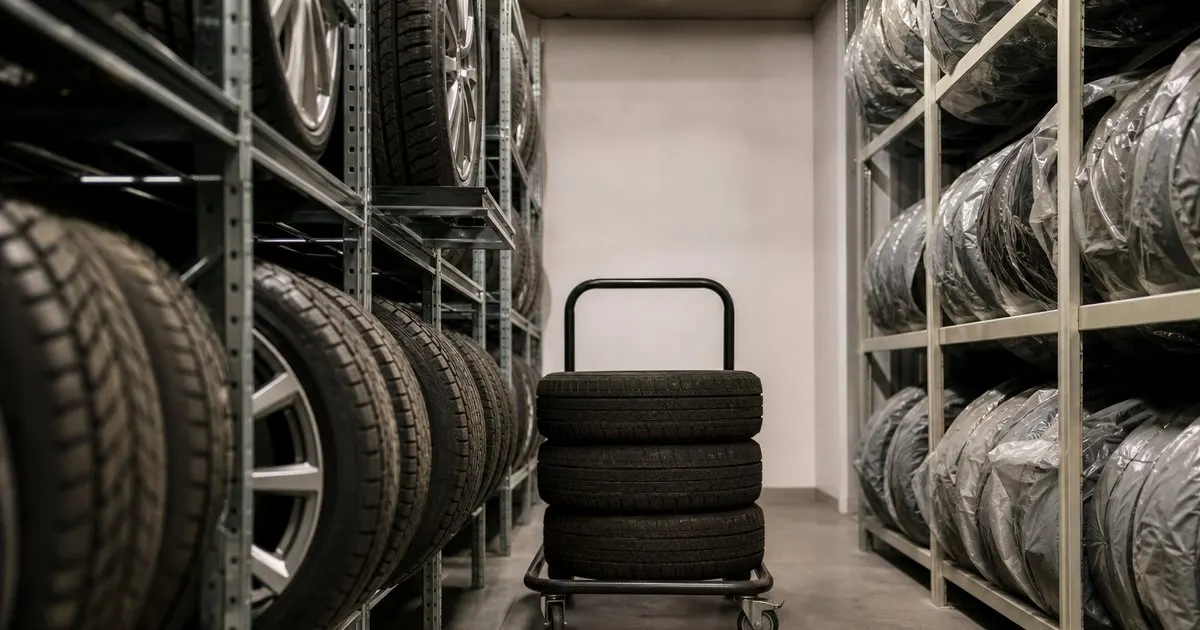
A customer with winter tires on their own wheels and a customer with bare winter tires are buying the same thing in their mind, a place to keep the off-season set. From the shop's side they are very different. The mounted set is heavier, bulkier, more valuable, and faster to change over. The bare set is lighter, easier to rack densely, and slower to change over because every swap is a dismount, mount, and balance. Storing both well means treating them as two products with their own handling and pricing. Related: When should you swap from winter tires back to summer tires safely?
This matters at intake, where the set type should be recorded as a first-class fact that drives everything downstream: which rack section it goes to, what the changeover slot length will be, what the storage fee is, and which checks are needed at pickup. A shop that records four tires and nothing else will find out which type it has when the car is already on the lift.
Keep reading: How do you track where every customer's stored tires sit on the rack?, What is the best way to remind customers about a seasonal tire changeover?, Why should a shop record tread depth history for every stored tire set?. See how TireKeepr helps you tire storage and seasonal changeover tracking.
Racking and handling mounted sets
Mounted sets belong on heavy-duty shelving rated for the weight, stacked flat with something between wheels to protect the faces, or hung on rack arms designed for wheels. Stacking flat is the most space-efficient and the most common. Keep the stack to one set and place the heaviest at the bottom so a single tech can break it down safely. Use lower shelves for the largest truck wheels; nobody should be pressing a heavy wheel overhead.
Set inflation for storage per the tire maker's guidance, record the pressure, and set it back to the vehicle's placard pressure at changeover. Because mounted sets carry TPMS sensors, wheel weights, and sometimes center caps and lug hardware, the intake record should list what came with the set so nothing is missing at pickup. Curb rash and finish damage on the wheel face are the most common disputes with mounted sets, so photograph every face before the set goes on the shelf. Related: Why should a shop record tread depth history for every stored tire set?
Racking and handling bare tires
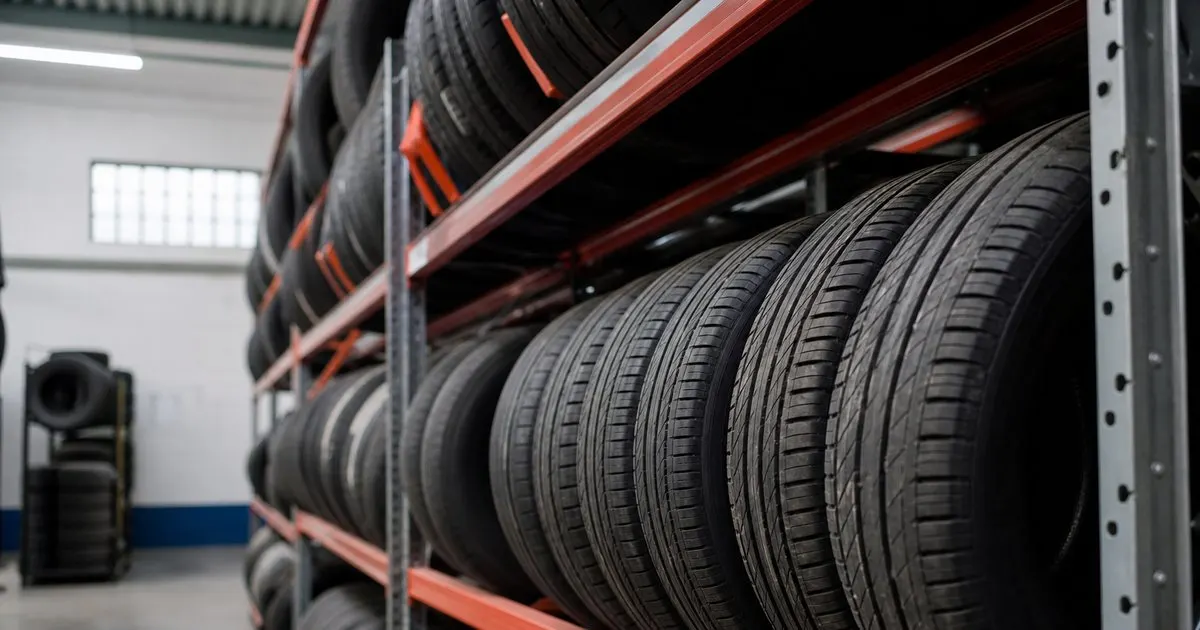
Bare tires should stand upright on a shelf, ideally in opaque bags, and be rotated a quarter turn every few weeks to avoid a permanent flat area at the contact point. They can be racked far more densely than wheels, on lighter shelving, and a single tech can move a set by hand. Do not hang bare tires by the bead, and keep stacks short if you must stack them at all.
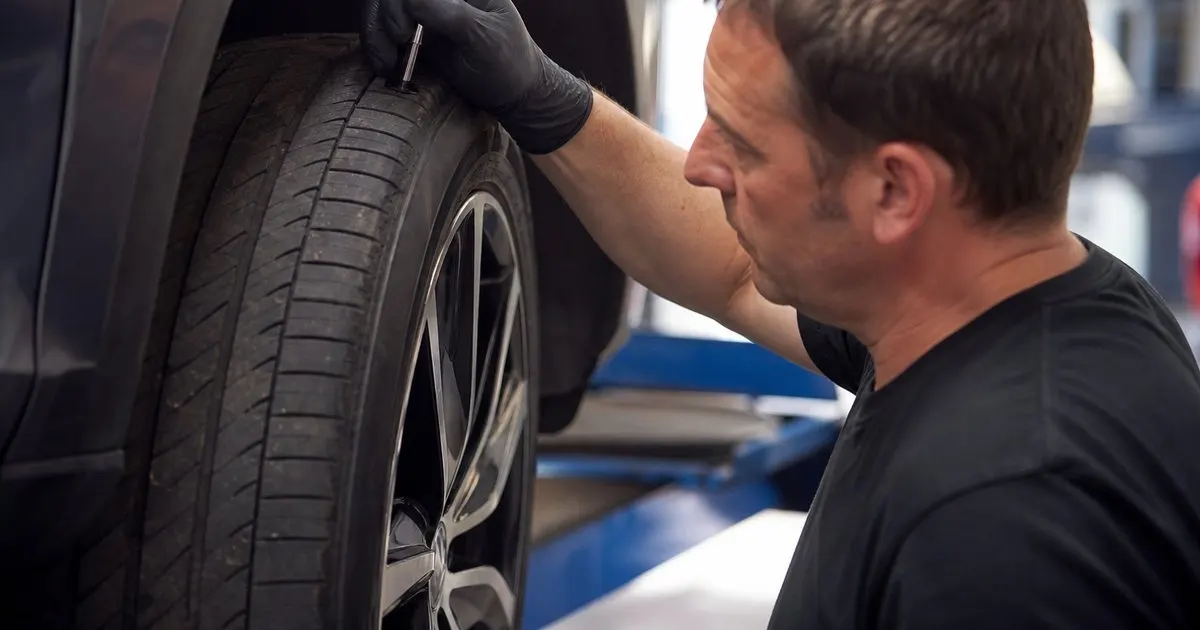
Because bare tires come off the customer's wheels at each changeover, they need position tracking per tire, not just per set, if you want to return them to the same corner of the car they came from. A simple wheel position mark on the tire at dismount, recorded in the set record, lets the spring changeover put them back where they were or rotate them deliberately. Note the tread depth per tire at each swap, since the wear pattern between positions tells you about the vehicle. Related: How do you track where every customer's stored tires sit on the rack?
Pricing, slots, and telling customers the difference
Many shops charge a different storage rate for mounted sets, reflecting the space and the rack investment, and a different changeover price reflecting the labor. Whichever way you set it, make the two products visible at booking and on the invoice so the customer understands why a neighbor with bare tires paid differently. Some customers will decide to buy a second set of wheels once they see the changeover cost difference, which is a fair conversation to have early. Related: What is the best way to remind customers about a seasonal tire changeover?
In scheduling, the mounted set changeover is a short fixed slot and the bare tire changeover is a longer one. Tie the slot type to the set record so online booking picks it automatically, and stage the day's sets in two lines near the bay. A storage program that knows which product each customer has can promise accurate times, price correctly, and hand back a set with every cap and weight accounted for.
- Mounted and bare sets are different products with different handling, slots, and prices.
- Stack or hang mounted sets on rated shelving; photograph wheel faces and log included hardware.
- Store bare tires upright, bagged, rotated, and tracked by wheel position.
- Record the set type at intake so racking, booking, and billing follow from it automatically.

Julien Jimenez
Julien Jimenez is an independent software builder based in Paris. He designs, ships, and operates focused SaaS products for small businesses and independent professionals. Read the full author page.
Find Every Stored Set In Seconds
Tire storage and seasonal changeover tracking. TireKeepr is built to help you put this into practice.
Start free trialMore from the TireKeepr blog
How do you track where every customer's stored tires sit on the rack?

What is the best way to remind customers about a seasonal tire changeover?
Why should a shop record tread depth history for every stored tire set?
Get the TireKeepr playbook
Practical guides on tire storage software, straight to your inbox as we publish them. No spam, unsubscribe any time.