How much rack space does a shop need before launching a tire storage program?
Storage programs fail on space before they fail on demand. A method for estimating sets, sizing racks, and leaving room for the growth that a good program brings.

Start from sets, not square feet
The right first question is not how big the room is but how many sets you expect to hold at peak. Peak is the end of the fall changeover, when nearly every summer set is in and almost nothing has gone out. Count your current customers who run a second set of tires, add the ones who have asked about storage, and then apply an honest estimate of how many would pay for the service. Many shops are surprised on the high side once the program exists and customers stop hauling tires in their trunks. Related: How do you track where every customer's stored tires sit on the rack?
Then think in sets rather than tires, because a set is the unit you move, label, and bill. A set of four passenger tires, mounted or bare, needs a defined footprint on a shelf, and that footprint is what you multiply. Measure your three most common sizes with the tires stacked the way you intend to store them, mounted sets flat and bare tires upright, and use the largest of the three as your planning number. Light trucks and SUVs on larger wheels will need more; plan a separate section for them.
Keep reading: How do you track where every customer's stored tires sit on the rack?, What is the best way to remind customers about a seasonal tire changeover?, Why should a shop record tread depth history for every stored tire set?. See how TireKeepr helps you tire storage and seasonal changeover tracking.
Turning a set count into rack bays
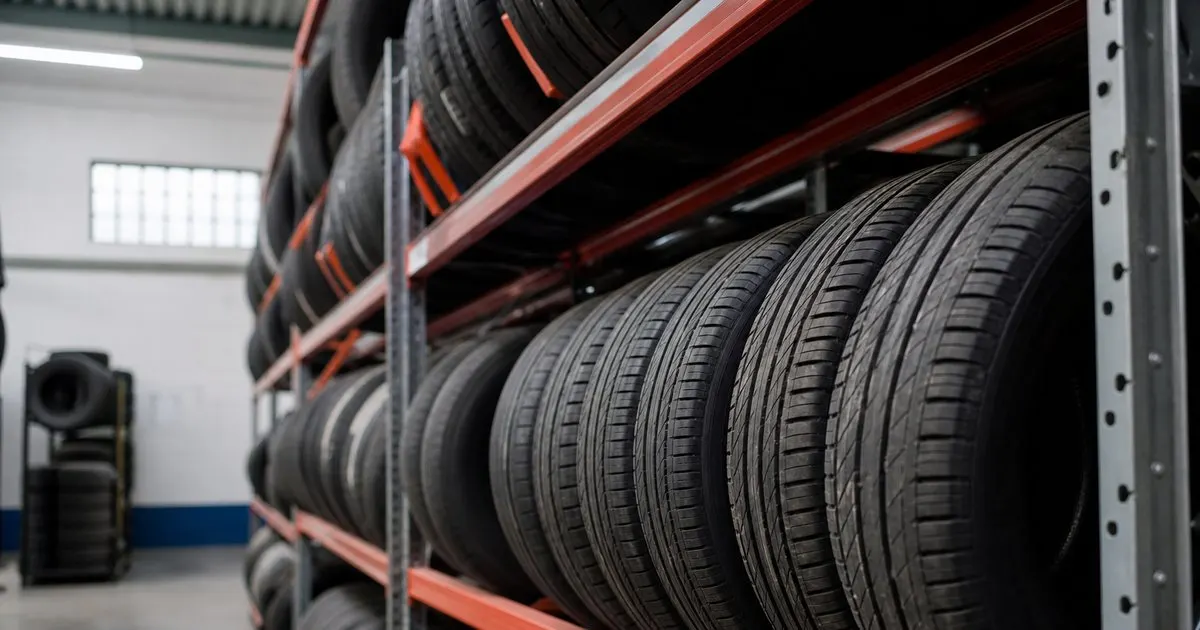
Once you know the footprint of a set, lay out a rack bay on paper: shelf depth, shelf width, and how many shelves fit between floor and ceiling while leaving room to lift a heavy mounted wheel onto the top level safely. Divide bay width by set width to get sets per shelf, multiply by shelves, and you have sets per bay. Many shops find that ceiling height and the reach of their staff limit them more than floor area does.
Now subtract the space you cannot use. Aisles must be wide enough for a cart with a full set, plus a person, plus room to turn at the end. Doorways, columns, sprinkler clearances, and electrical panels all eat bays. A room that looks like it holds two hundred sets at a glance often holds noticeably fewer once aisles and clearances are drawn. Sketch it to scale before you order a single rack section.
Planning for growth and for the awkward sets
A storage program tends to grow every year it exists, because each stored set comes back for a changeover appointment and often brings other work with it. Plan the room for what you expect in two or three seasons, not just this fall, and if the space cannot grow, decide in advance what your cap is and how you will tell customers you are full. Turning people away is fine; discovering you are full in October with sets already on the floor is not. Related: What is the best way to remind customers about a seasonal tire changeover?
Awkward sets deserve their own zone. Large truck tires, oversized off-road sets, and low-profile wheels that should not be stacked will not fit the standard bay math. A small floor-level area for the heaviest sets keeps staff from lifting them overhead, and a wall-mounted hanging rack for the wheels you would rather not stack keeps them out of the main flow. Keep this zone small; it should be the exception, not a second storage room. Related: Which rack labeling system works best for a busy tire storage program?
Making every bay count with location tracking
The most common capacity problem is not too few bays but too many half-empty ones, because nobody can tell which slots are free without walking the room. When every set has an assigned position that is recorded at intake and cleared at pickup, the shop always knows its real occupancy, and spring pickups open slots that fall intakes can fill without a search. Related: Why should a shop record tread depth history for every stored tire set?
Numbering bays and shelves consistently, and recording that position alongside the customer and set details, is what makes this possible. Whether you do it in software or on a well kept board, the goal is the same: a number that tells you how many sets you can still accept today. That number is what lets you keep taking reservations with confidence right up until the room is actually full, rather than guessing and leaving a share of your rack space unused all winter.
- Estimate peak set count first, then convert to footprint using your largest common size.
- Ceiling height, safe reach, and aisle width usually limit capacity more than floor area.
- Plan for two or three seasons of growth and set a clear cap before you fill up.
- Position tracking turns scattered empty slots into real, bookable capacity.

Julien Jimenez
Julien Jimenez is an independent software builder based in Paris. He designs, ships, and operates focused SaaS products for small businesses and independent professionals. Read the full author page.
Find Every Stored Set In Seconds
Tire storage and seasonal changeover tracking. TireKeepr is built to help you put this into practice.
Start free trialMore from the TireKeepr blog
How do you track where every customer's stored tires sit on the rack?

What is the best way to remind customers about a seasonal tire changeover?

Why should a shop record tread depth history for every stored tire set?
Get the TireKeepr playbook
Practical guides on tire storage software, straight to your inbox as we publish them. No spam, unsubscribe any time.